
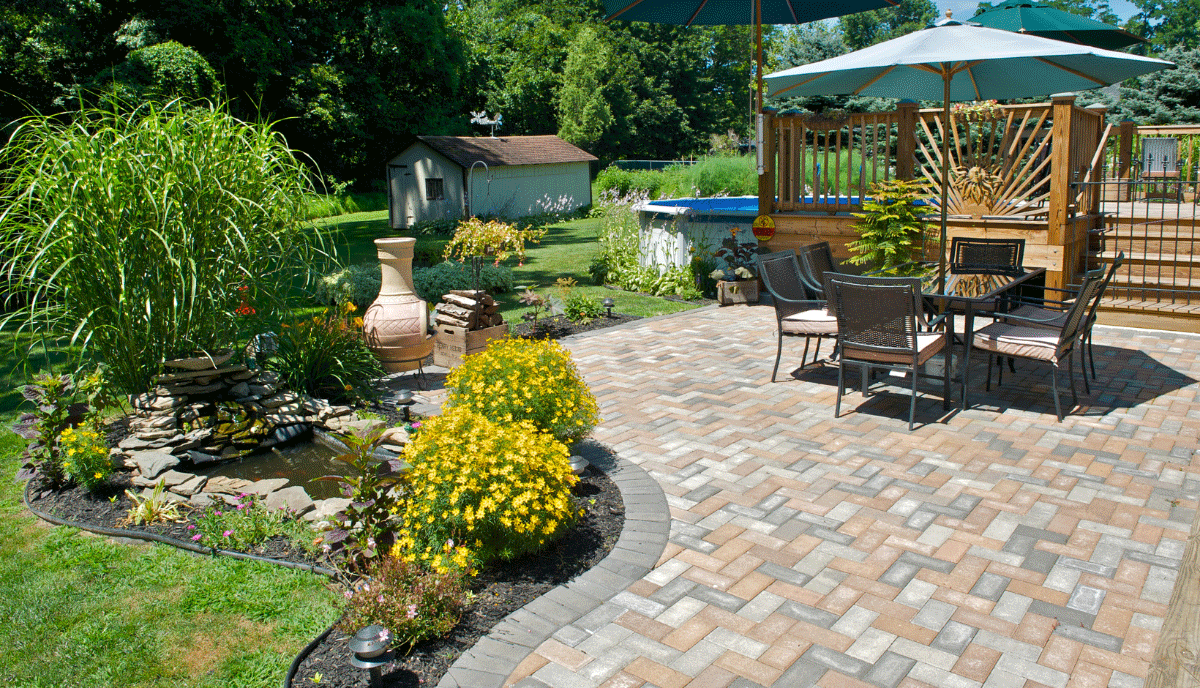
Whether you’re going for something modern, architectural, minimalist/maximalist, boho, or vintage, your paver pattern is the decision maker of your outdoor design. It’s the feature that decides whether it all comes together, creating visual flow and aesthetic intention. It’s a hit or miss type of situation. The same pavers, same budgets, and same spaces can deliver two entirely different looks depending on how they’re laid. Just remember that choosing a pattern is less about trends and more about intent. You want it to hide imperfections and handle traffic, all while creating structure and simply looking good.
1. 90° Herringbone
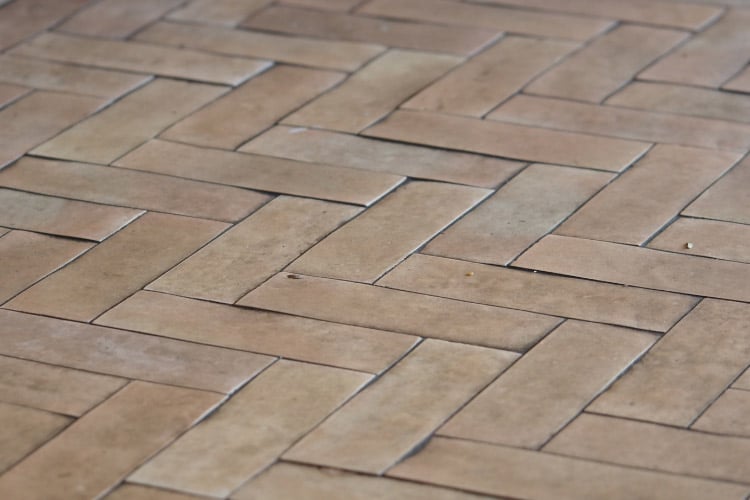
90 degree herringbone involves rectangular pavers that interlock at right angles. The idea is a zigzag layout that resists shifting under heavy foot traffic because it distributes weight evenly. You can use it in your driveways, walkways, and patios with brick, concrete, or clay pavers. Actually, it’s perfect for any high-use area. The rectangular pavers and the zigzag pattern work well in rectangular areas where the pattern can run parallel to walls or edges. It’s one of those popular paver patterns that feels structured and classic without feeling stiff.
2. 45° Herringbone
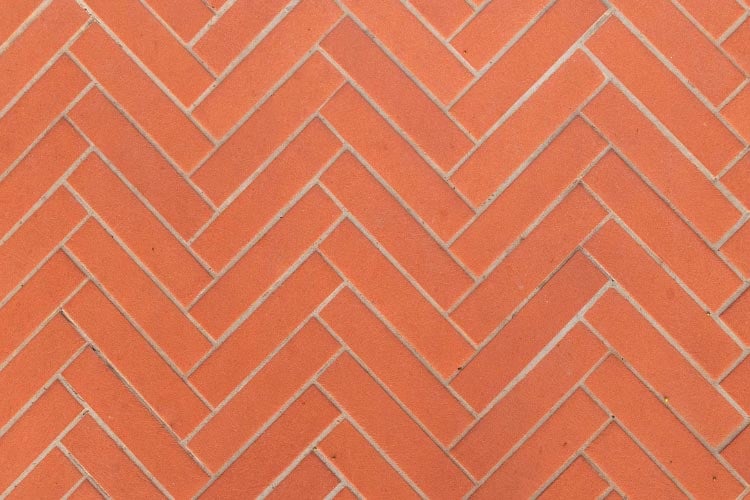
The 45 degree herringbone pattern is just as strong as the 90 degree herringbone, but it adds some extra drama. With this design, you rotate the layout diagonally so the pattern draws the eye outward. It makes the space feel larger and adds visual movement and a sense of flow. The diagonal lines soften rigid yard layouts and hide imperfections and slight misalignments, which makes it perfect for square or irregular spaces. It requires more labor to cut the edge pavers, but the final product is more than worth it.
3. Basket Weave
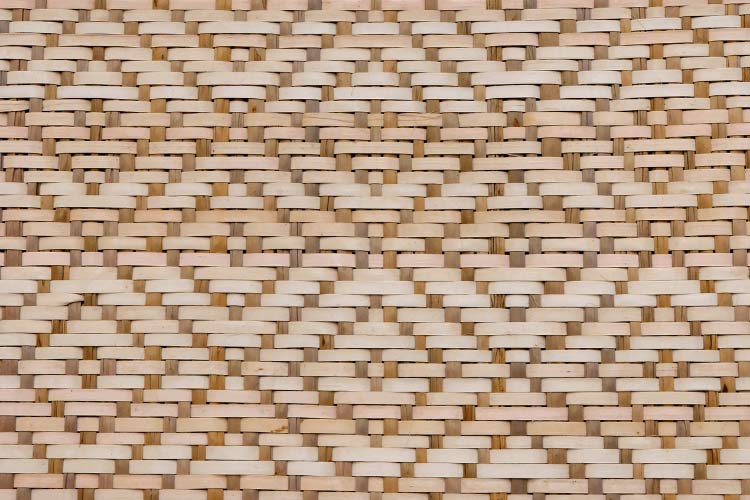
With the basket weave pattern, pavers are arranged in pairs, alternating direction to look like woven texture. It’s called basket weave because it takes on the same pattern as traditional woven baskets made from rattan, bamboo, sweetgrass, willow, seagrass, etc. The pattern works best with rectangular pavers and in courtyards and garden paths. It visually breaks up large areas and it suits brick and stone particularly well. But the truth is that with a basket weave pattern there are no rules and certainly no rights and wrongs. It’s all about rhythm.
4. Running Bond
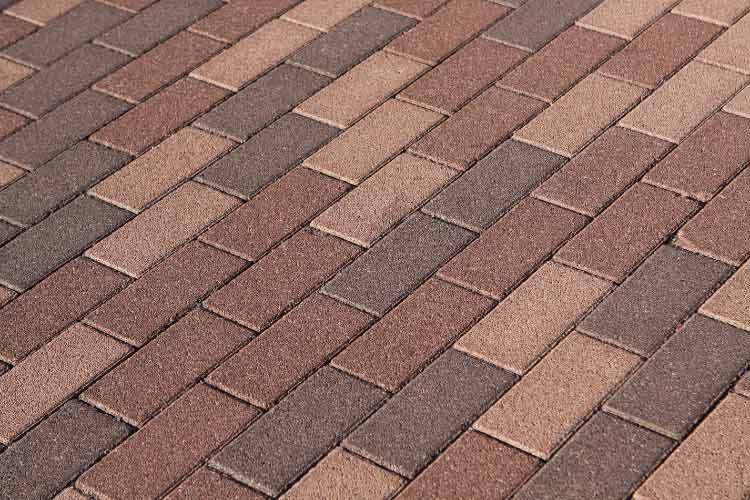
Running bond is without a doubt one of the most popular paver patterns because it’s simple, efficient, and versatile. The pavers are all laid in staggered rows, offset by half or third lengths. You can use almost any shape and size of paver and it’s surprisingly easy to install because it requires minimal cutting. It pairs well with modern and traditional settings, visually elongates spaces, and creates clean lines and a sense of direction. The pattern may be straightforward, but if you pair it with quality materials and some contrasting borders, it’s far from boring.
5. Stack Bond
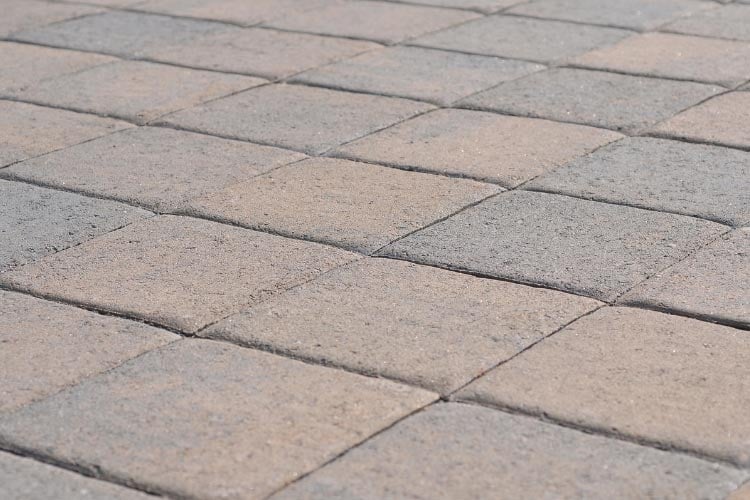
Stack bond emphasizes symmetry and precision with simplicity as the goal. It’s a crisp and contemporary pattern with pavers aligned perfectly in both directions, creating a grid with clean lines. The pattern works best on perfectly level surfaces because any imperfections become noticeable. Large-format concrete pavers can elevate the look further than other pavers, making it both visually striking and elegant. The pattern does rely on proper edge restraint to prevent shifting and it isn’t very structurally forgiving. It’s one of the popular paver patterns that are more about design than anything else.
6. Circular Pattern
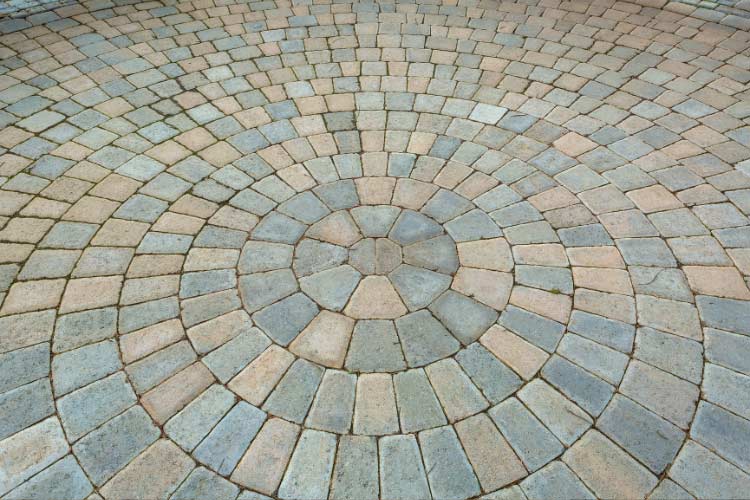
Circular patterns work beautifully around fire pits, fountains, and seating areas. They soften hard edges by introducing organic flow, creating movement and focus. The idea is to let the pavers radiate outward from a central point, forming arcs or full circles. Installation requires precise cutting and planning, which is why it could be best to leave it to the professionals with this popular paving pattern. The thing with circular patterns is that they work best as focal features rather than full-coverage layouts.
7. Random Ashlar
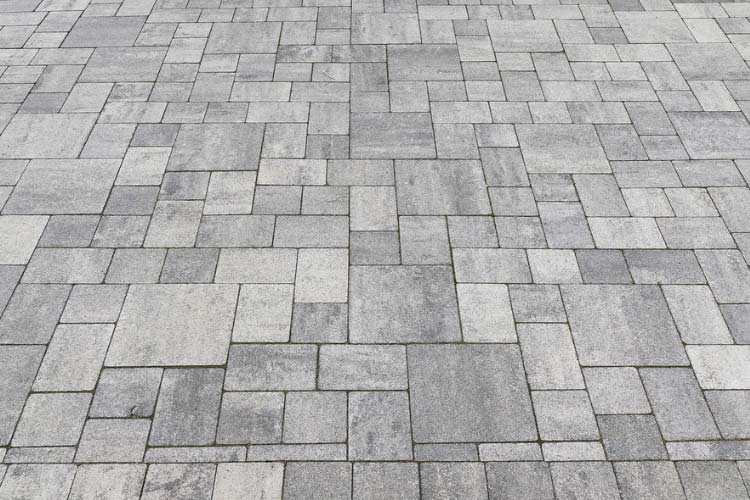
This is one of the only popular paver patterns that makes use of mixed-size pavers arranged in repeating yet irregular layouts. Despite the name, it follows a planned layout to avoid awakening gaps, creating a natural and relaxed design that remains structured. Actually, the only random part of the random ashlar design is the name, and maybe the varying paver sizes. Random ashlar avoids rigid lines, which is why it’s ideal for large patios or organic garden designs. It works well with stone or stone-look pavers.
8. European Fan
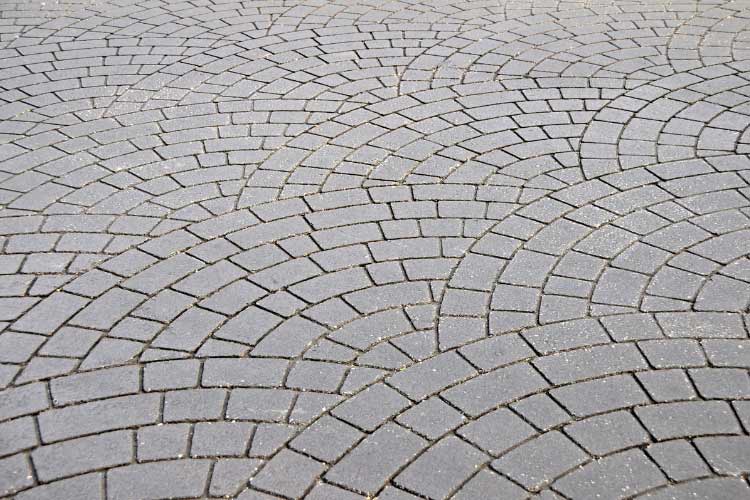
If you’re a fan of the circular pattern idea, you’ll love the European fan pattern and its elegant, old-world feeling. It’s especially popular in courtyards, pathways, and patios that have character. Think vintage street in a quaint European village, where locals gather at cozy cafes, over large cups of coffee. The pattern uses specifically shaped pavers to create curved, fan-like arrangements that repeat across the surface. It’s the ideal option if you’ve got irregular spaces with unevenness that need to be paved, especially if there’s warm-toned stone or brick to go with it.
9. Chevron
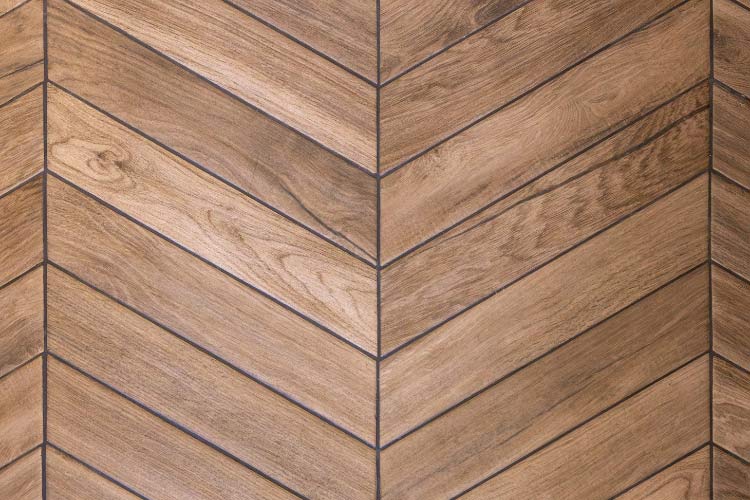
The final popular paver pattern is used in home decor and design (flooring, rugs, wallpaper, backsplashes), fashion (clothing, fabrics, textiles), and even symbolic insignia (military, heraldry). It’s more than a simple paver pattern. It’s a design choice. A statement. The pattern creates sharp, continuous zigzags with pavers cut at angles to meet cleanly. Unlike herringbone, chevron lines are meant to align perfectly, which is why installation requires precision and custom cuts. It works well in long, narrow spaces because it elongates it even further.

Jamie is the founder of The Backyard Pros. When he was 15 years old he started working at a garden centre helping people buy plants, gardening products, and lawn care products. He has real estate experience and he is a home owner. Jamie loves backyard projects, refinishing furniture, and enjoys sharing his knowledge online.