
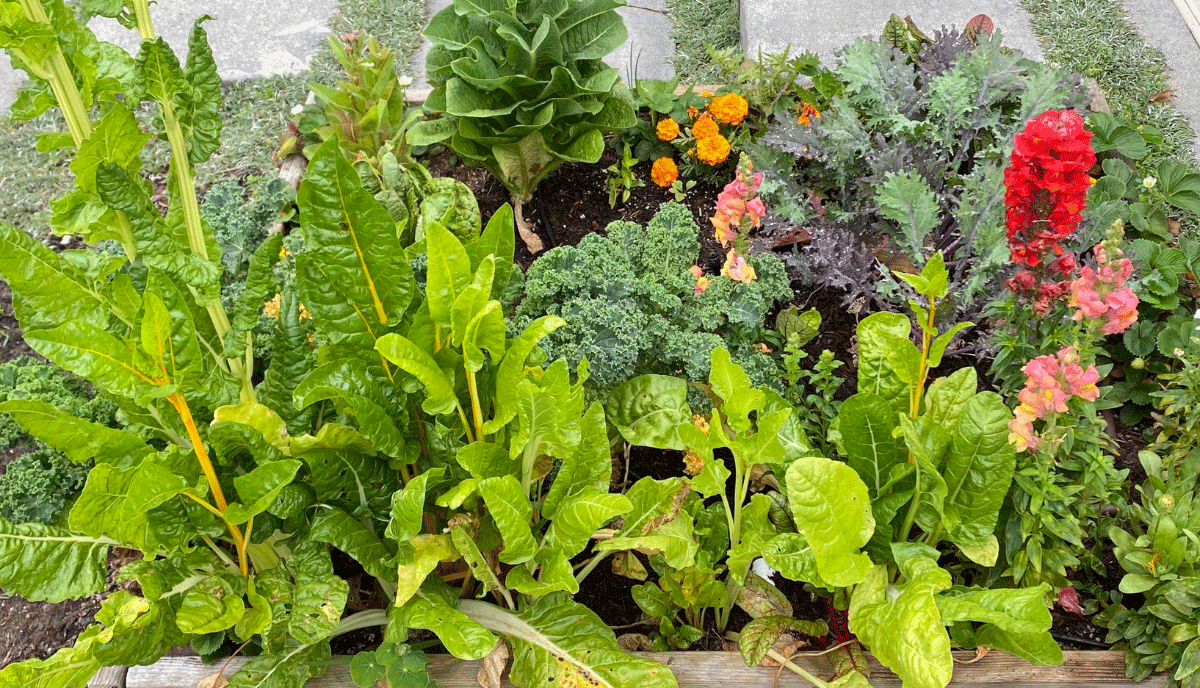
You don’t need an entire farm to grow all of your favorite veggies yourself. Your deck can be your very own pantry with a view if you choose the right setup and the right vegetables. The key is to think practical, rather than beautiful. If you can reach it easily, you’ll harvest more often. If it drains well, it’ll be an effortless process with little maintenance and no issues. With a deck garden, it’s all about vertical thinking, lightweight containers, and mobility. But don’t stress about it too much because these easy vegetable garden ideas for small decks cover all of that.
1. Hanging Grow Bags
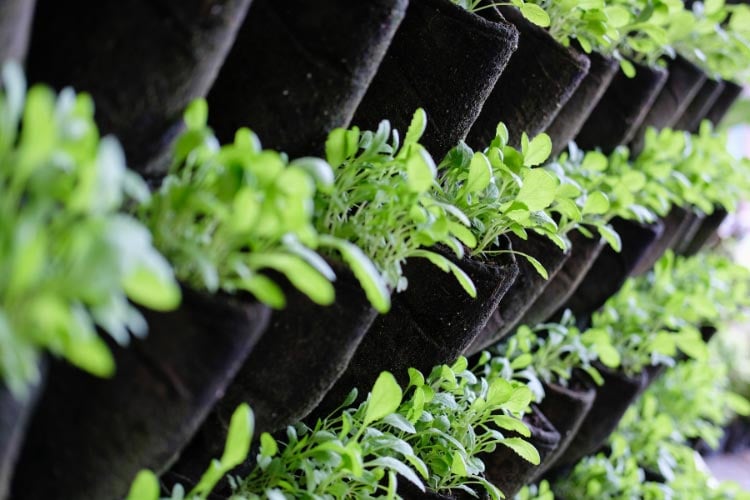
You can turn airspace into edible planting space with hanging grow bags. The lightweight fabric is breathable, so your plant roots will be happy and healthy. Hang the bags from hooks, rails, or freestanding frames where they won’t take up any of your usable floor space. You can fill them with strawberries, lettuce, spinach, herbs, and any other suitable plant. Since they’ll be at eye level, maintenance and harvesting will be easy, and floor pests won’t be able to get to them as easily. Grow bags have excellent drainage so you have to be more concerned about your plants drying out than about overwatering.
2. Hanging Soda Bottle Planters
While not as beautiful as expensive planters, hanging soda bottles are very effective. Plus, vegetable gardening is less about beauty and more about productivity, right? Cut plastic soda bottles horizontally or vertically and add drainage holes to the bottoms. Hang them over your railings or against a wall with strong string or wire and fill them with shallow rooted crops like herbs, or even leafy greens. The clear bottles allow you to check on the moisture levels easily, but if you line them with fabric or paint them you can reduce algae growth.
3. Small Herb Pots
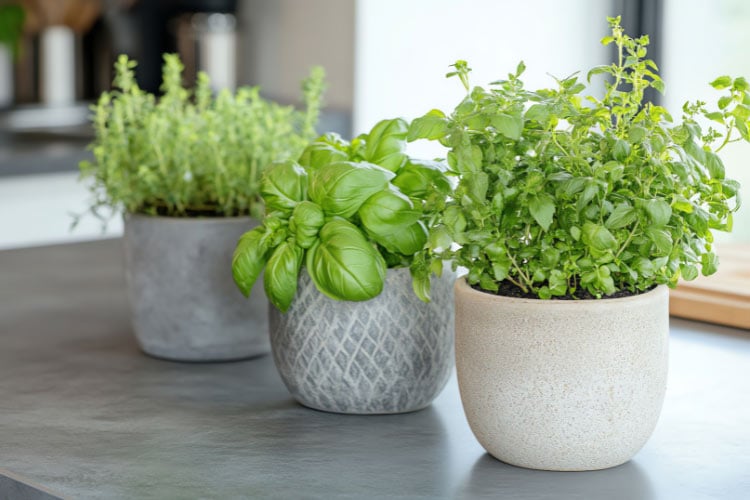
Don’t underestimate small herb pots as a way to bring edible plants to your small deck. These little containers are compact for a reason, so you don’t have to place them all together. They’re ideal for filling up small gaps on your deck with basil, parsley, chives, thyme, and coriander. Your basil doesn’t have to room with the parsley, it can stand next to a decorative piece. Thus, you don’t have to dedicate entire spaces on your deck to vegetable gardening. The most important considerations are proper drainage, quality potting mix, consistent sun, regular harvesting, and sufficient watering.
4. Vertical Planter Towers
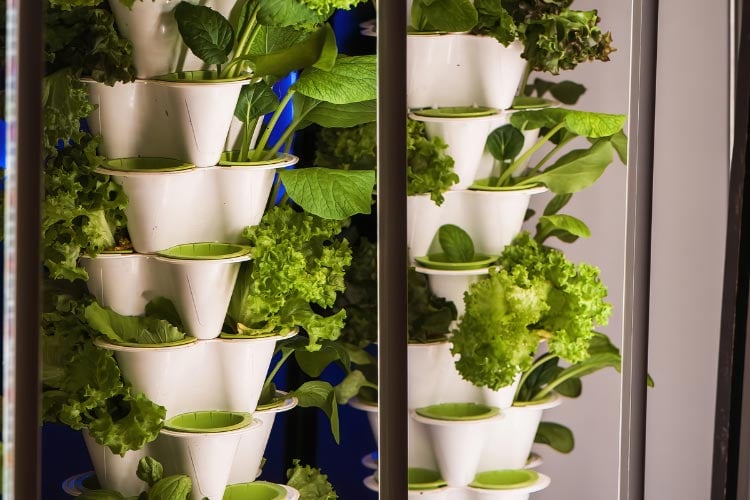
Planter towers have multiple planting pockets stacked in a single horizontal structure that takes up little floor space. It’s the ideal small deck vegetable garden solution for you, especially if you’d like to plant lettuce, herbs, strawberries, or spinach. The upper levels dry faster, so they need consistent watering, but you need to be sure not to overwater the lower levels. For balanced sun exposure and healthier crops, rotate the tower occasionally. Vertical planter towers create a strong focal point while producing a surprising amount of food in a small space.
5. Railing Veggie Boxes
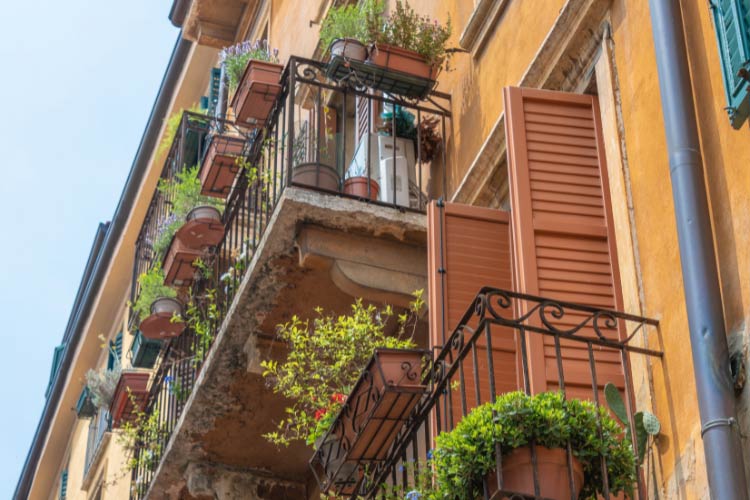
If you’ve already got the railing, why not use it? You can grow a lot of veggies, from herbs and salad greens to compact vegetables, in a couple of boxes clipped onto your deck rails. You don’t even need to drill, as long as you ensure that the soil is lightweight and the boxes aren’t overcrowded. Space the boxes evenly to ensure that all plants get sufficient light exposure and to create a clean look. For a personal touch, you can also paint your veggie boxes to match the aesthetic of your deck.
6. Bucket Vegetable Garden
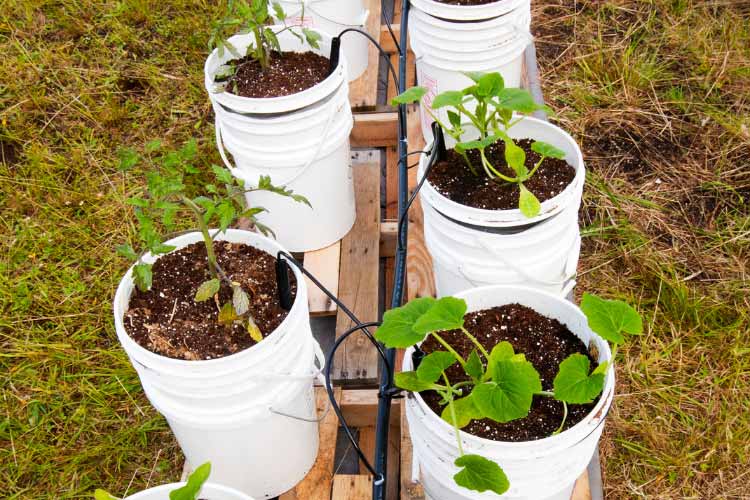
A bucket veggie garden is both simple and flexible. It allows you to take your plants wherever you want them, from sunny spots to indoors when it’s getting too cold. Use food grade buckets with drainage holes in the bottom to plant tomatoes, peppers, potatoes, and even carrots. You can place them on surfaces in elevated spots to improve drainage, or you can even hang them with strong wire. The concept of different veggies in different buckets makes it easier to water each plant according to its needs and to harvest consistently for healthier growth.
7. Trellises
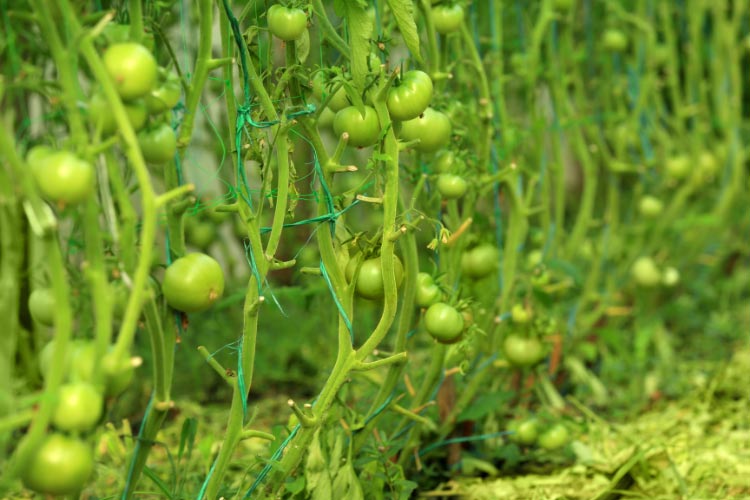
The best thing about a trellis isn’t the beautiful backdrop it creates once it’s fully covered. It’s the fact that it allows vegetables to climb vertically instead of sprawling horizontally over large surfaces. This saves you so much space and gives you even more planting potential. Use a couple of freestanding trellises or mount them to a large pot with beans, peas, and cherry tomatoes. The vertical growing process improves airflow and light exposure, and once the plants are established you’ll have more privacy on your small deck.
8. A-Frame Or Ladder Garden
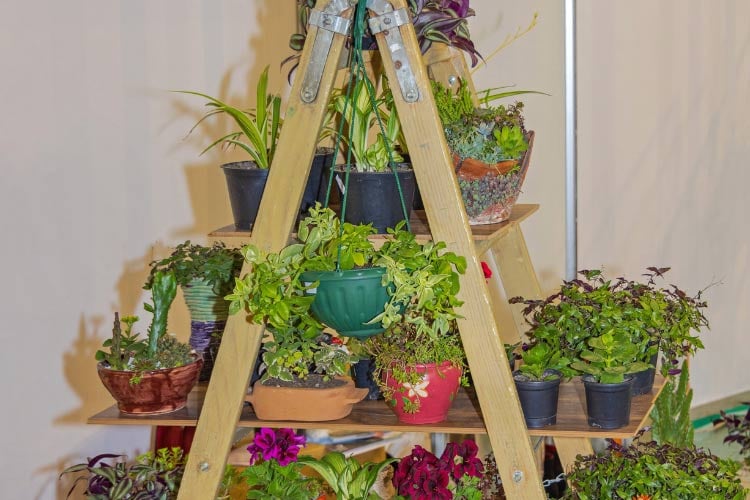
A-frames and ladders are designed to use less horizontal space by maximizing vertical space. They give you multiple layers and shelves to hold all of your potted veggies. The layout typically involves a small shelf at the top, growing in size all the way down to the biggest shelf right at the bottom. These types of deck gardens are best suited for herbs, greens, and small fruiting plants. All of your plants get consistent sunlight, you can easily reach them to water and harvest, and the look of the ladder garden is not too shabby. It’s also very easy to reposition the setup or to fold up and store the ladder when you’re done with it.
9. Mounted Gutter Garden
With vinyl or metal gutters, you can turn a simple wall on your small deck into a veggie garden. Gutters work best for shallow rooted veggies, lettuce, and herbs, but you need to ensure proper drainage by making holes in the bottom. Place your gutters against a wall that gets good light and ensure that they’re mounted securely. You don’t want to wake up to all of your beloved veggies on the ground one morning.
