
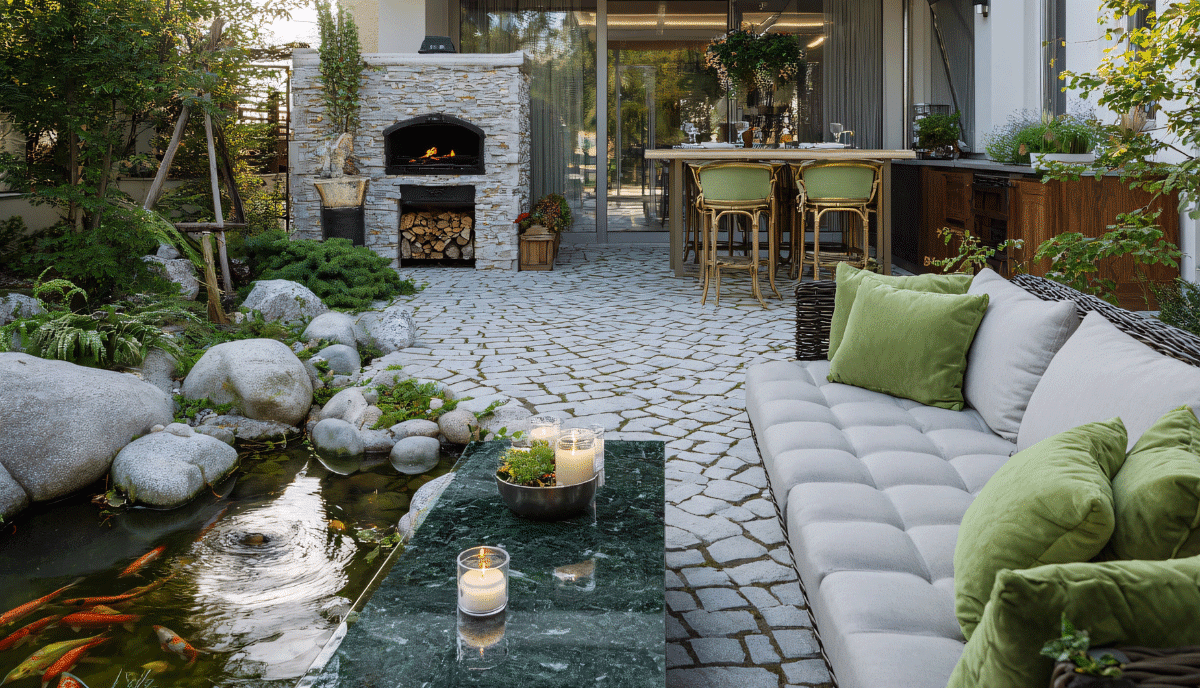
A good patio frames the exterior of your house and makes it all look intentional, which gives it a fresh 5-star look. Even if the rest of your yard is still at a 1-star stage. Sadly, patios often come with price tags that simply can’t be justified. But if there’s one area that you can thrift and DIY without worrying that it’s going to end up looking tacky, it’s your patio. Think high-end without spending the next six months’ grocery budget on tiles and unnecessary features. To get you started, here are some cheap paver patio ideas that look amazing, prioritizing creativity instead of cash.
1. Reclaimed Brick Patio
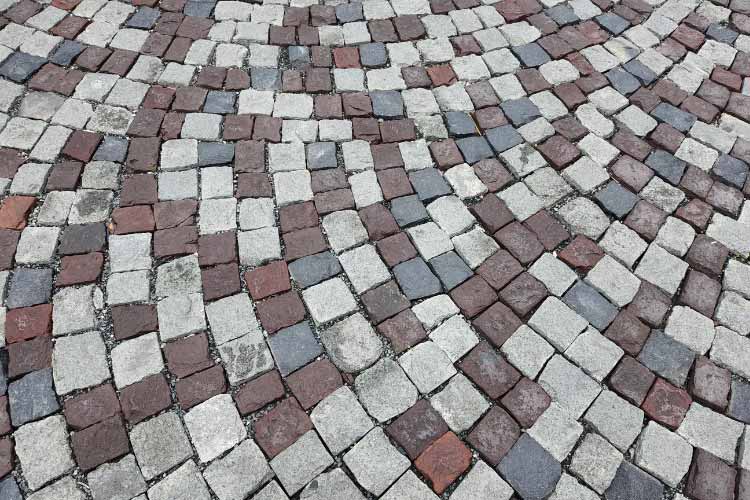
You can get a bunch of old bricks from demolitions, salvage yards, and local classifieds because once people are done building, they just want them gone. In most cases you’ll get them for free, but if you end up paying for the bricks it won’t break the bank. This cheap paver patio material looks modern and expensive, and it pairs beautifully with almost any house style. To keep labor minimal, lay them in simple patterns, like running bond or basket weave. Now, don’t spend what you saved on the bricks on the base because sand or fine gravel will do the trick. It allows for breathing and easy adjustment if the ground starts shifting. For a more natural look on your patio, go for moss or low groundcover to creep into awkward gaps.
2. Painted Concrete Pavers
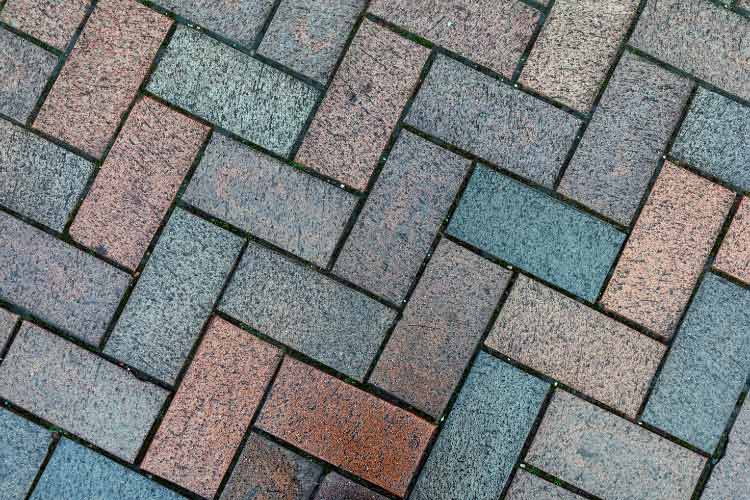
Concrete pavers are much cheaper if you buy them slightly damaged or worn. But they also don’t have to be ugly to deserve a fresh coat of exterior masonry paint. You can turn dull, simple patio flooring into patterned tiles, faux stones, or a bold graphic statement. It all sounds very exciting and there’s a lot of creative potential, but the key is restraint. You’re going to want to stick to a limited color palette so it looks well-designed, and not overwhelming or chaotic. Think soft grays, charcoal, muted terracotta, and even off-white tones to hide wear. If you’d like to take it up a notch, use stencils with geometric patterns or repeating motifs to add visual interest. Remember to seal everything properly to prevent peeling in the near future.
3. DIY Poured Concrete Squares
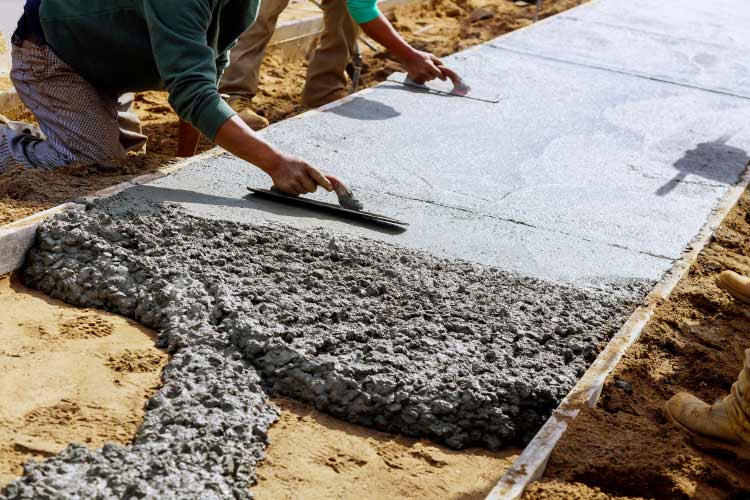
Concrete and patios go together beautifully. That’s because it ages well, elevates the entire look, and brings a modern touch to an otherwise simple feature. But concrete slabs can be exceptionally pricey, which is why the onus is on you to get the look without the cost. You can cast your own concrete slabs in different sizes with wooden molds. You get to control the thickness, texture, and spacing, and you can even add some flair by pressing leaves, stones, or textured items into the surface before the concrete sets. Lay your cured concrete slabs with grass, sand, or gravel between them to create the patio of your dreams. The more space between the slabs, the better.
4. Pavers With Grass Strips
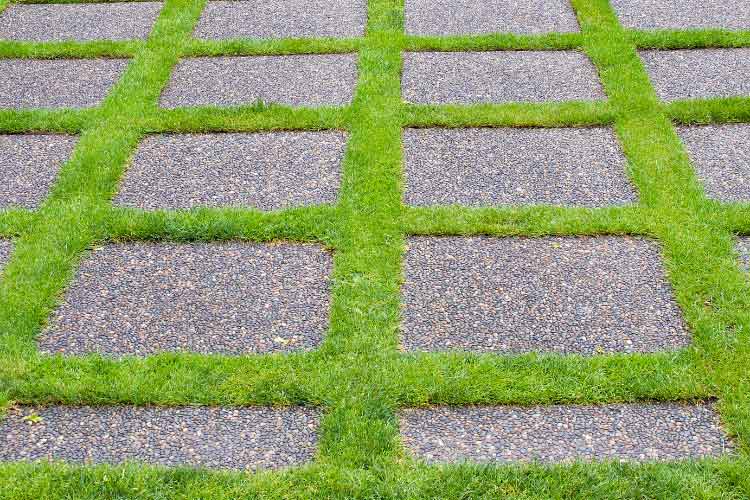
If you can source pavers at a low cost, it’s a win. But if you can use even fewer of them than you normally would, it’s even better. Alternate your pavers with narrow strips or bands of grass to reduce the number of pavers needed. Lay your base, pack your pavers with equal spaces between rows, and plant your grass. The idea works very well with rectangular pavers in parallel lines and it’s guaranteed to give your patio a softer, more open look that feels modern and breathable. The grass breaks the hard surface with a visual pause and improves drainage while reducing heat buildup. This is a very big bonus if you’ve got a sunny yard. Be sure to use hardy grass or something that requires less maintenance that can handle foot traffic.
5. Pallet-and-Paver Combo Patio
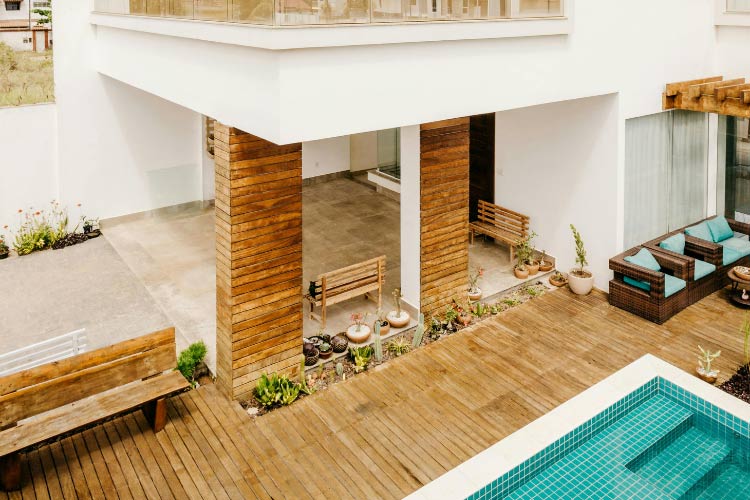
Pallets are nice. Pavers are nice. Use them together and you’ve got a great cheap patio paver combo that looks amazing. The idea is to form the foundation with the pavers because they provide stability and structure. Then, let some pallets step in as decking, seating bases, or raised platforms. You’ll need fewer pavers throughout your patio design and the wood texture brings in a cozy, warm feeling. Arrange the pavers with treated or well-sanded reclaimed pallets between or on top of them to define zones. You’d be surprised to learn what this unlikely combination can do for uneven yards. And the best part? You can swap out pallets and change the layout without intensive labor.
6. Large Budget Pavers
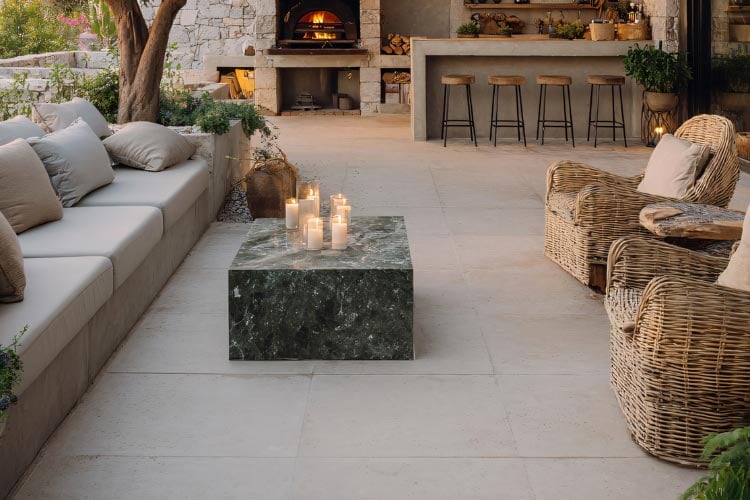
Large pavers usually come with large price tags, but they don’t have to. There are many budget versions made with plain concrete that can look expensive and modern if you space them correctly. In this case, less is more and the gaps are in charge of the aesthetic appeal. Fill those gaps with gravel or grass to stretch your materials even further and lower your costs. Your patio, whether small or oversized, will feel bigger because visual clutter will be reduced. In terms of color, stick to neutral tones for a timeless look that won’t look horrible once it’s used.
7. Gravel Base with Spaced Pavers
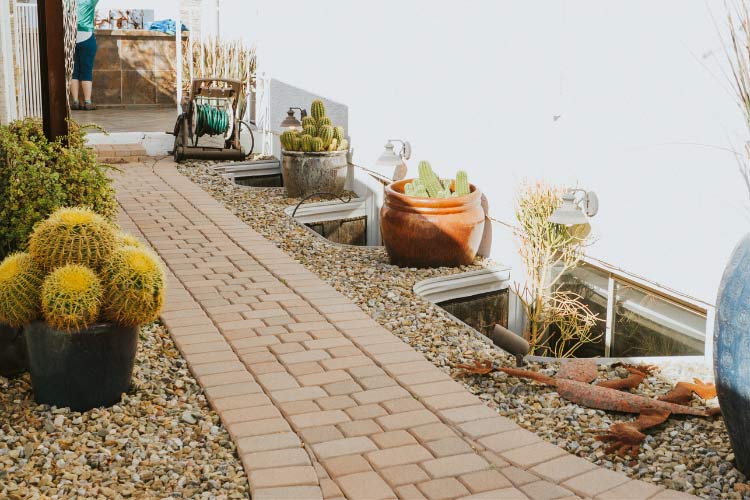
Gravel is the real MVP of exterior design and landscaping. It’s inexpensive, easy to install, and great for drainage, which also makes it low-maintenance. You can use it as a patio surface on it’s own, but it’s an excellent base for spaced pavers. Place your pavers at regular intervals to cover just enough surface to make it walkable. Fill the gaps with gravel that complements your pavers. For a dramatic effect, go for dark, while light gravel feels more airy. The setup works well for informal patios and it easily adapts to irregular shapes and sloped surfaces.
8. Pavers With River Rock Accents
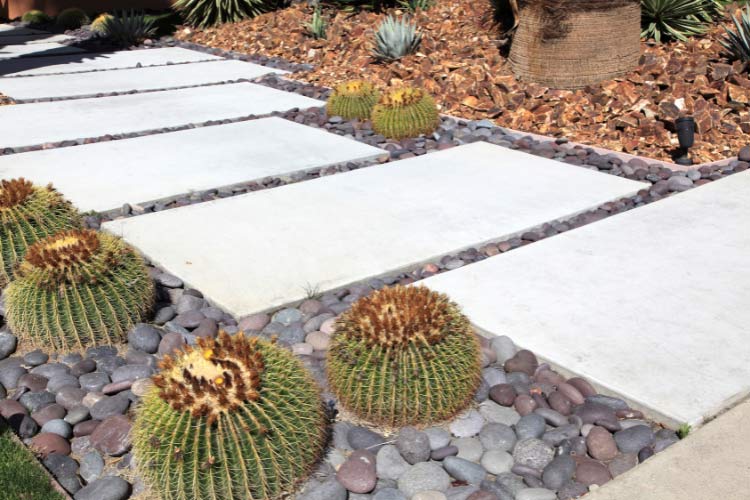
River rocks are just as good an option as regular gravel. In fact, it may even be better because the smooth stones catch light differently throughout the different stages of the day. It gives a patio a subtle sense of motion and softens the hard look of concrete and brick pavers. Plus, incorporating nature into any design is always a good idea. Use rocks in channels, borders, or pockets between larger pavers to improve drainage and help manage runoff. If you set your pavers and fill the areas with smooth rocks using landscape fabric as a base, you’ll save money without compromising on quality and aesthetics.
9. Sand-Set Concrete Pavers
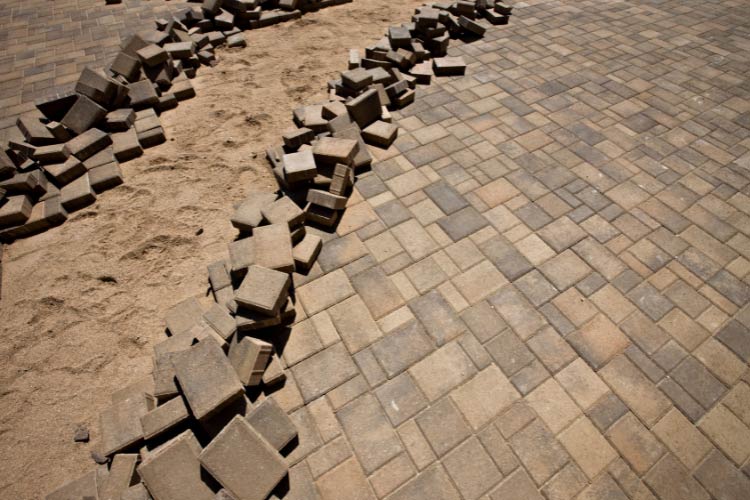
This list of cheap paver patio ideas that look amazing covers most materials that can be used between pavers, but there’s still an underrated gem to be discovered. Sand can make a surface feel solid without being rigid and it allows pavers to settle naturally. Lay simple concrete pavers in straightforward patterns with a sand base that fills the joints. The repairs, maintenance, and changing of this type of patio flooring is going to be even easier than it is cost-effective.
