

A good dog fence does more than keep extra little paws on your property and off busy roads. It also keeps uninvited paws off your property and protects innocent flower beds from a lot of enthusiast digging. Unfortunately, some store-bought fences aren’t suitable for all dogs because size, energy level, and creativity can easily outsmart a fence. It takes some time and effort to construct your very own perfect dog fence because drainage, slope, and soil type matter just as much as blockage and looks. Not to mention cost and materials. Here are some DIY dog fence ideas for your yard that are guaranteed to keep your pawed family members inside without breaking the bank.
1. Wooden Picket Fence
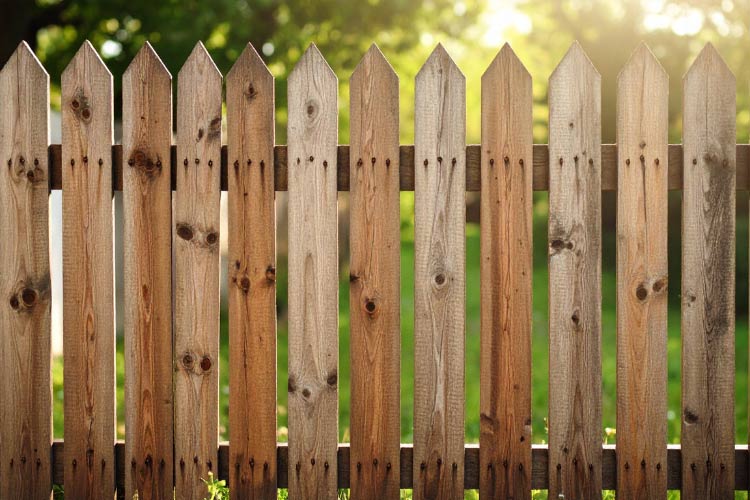
White picket fences may belong in storybooks, but they also belong around your yard if you’ve got dogs. Use pressure-treated posts set in concrete and space them six to eight feet apart to prevent leaning. Attach cedar or pine pickets to the posts, spaced narrowly to prevent noses from squeezing through and getting stuck. If your dog’s got the tendency to jump over obstacles, remember to increase the height to at least four feet, or you could add a decorative topper rail. And if they’ve got a charging habit, reinforce the picket fence with diagonal planks. In terms of aesthetics, you can leave the wood bare as long as you seal it properly, but some paint has never hurt anybody.
2. Chicken Wire Panels
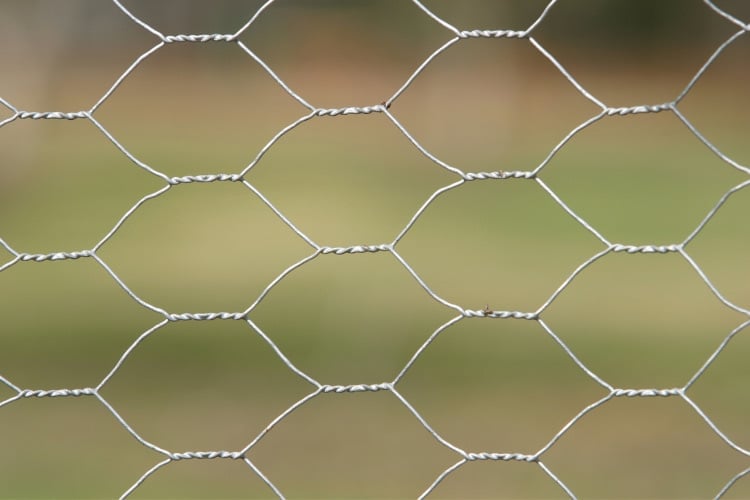
Chicken wire is one of the cheapest DIY dog fence ideas for your yard. Chicken wire panels suit small dogs the best, but a top rail and a buried apron of wire that extends outward underground can keep most dogs in. Stretch galvanized wire tightly between wooden or metal posts and staple it securely along every edge. It’s important to do this properly because your dog’s safety may be at risk if there are any sharp or rusty edges. Pair your wire with a wooden frame if you’re looking for a neater look and coat your panels with vinyl for longevity and damp resistance.
3. Pallet Wood Barrier
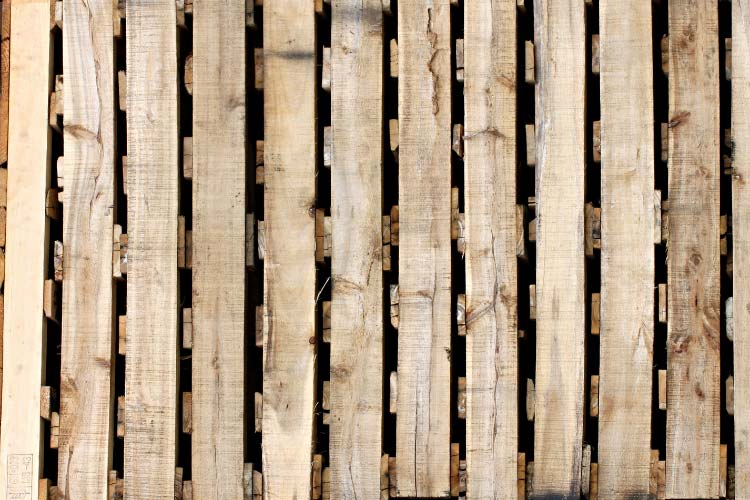
You can never go wrong with a couple of pallet wood planks and a coat of paint. Pallets are mostly free if you know where to source them, or you can purchase them for cheap from most stores that use forklifts. Break the pallets into planks and sand the rough edges. You can even take it a step further and fill the little holes that really bother you. Sink a couple of posts into the soil for strength and mount the planks in the sections between them. You can lay the planks out to look like a picket fence, create a solid wooden wall, or stagger the planks for airflow and to block all possible escape routes. Once you’re happy with the layout, reinforce the bottom edge with pressure-treated lumber and seal all of the wood with exterior stain or paint.
4. Raised Garden Bed Barrier
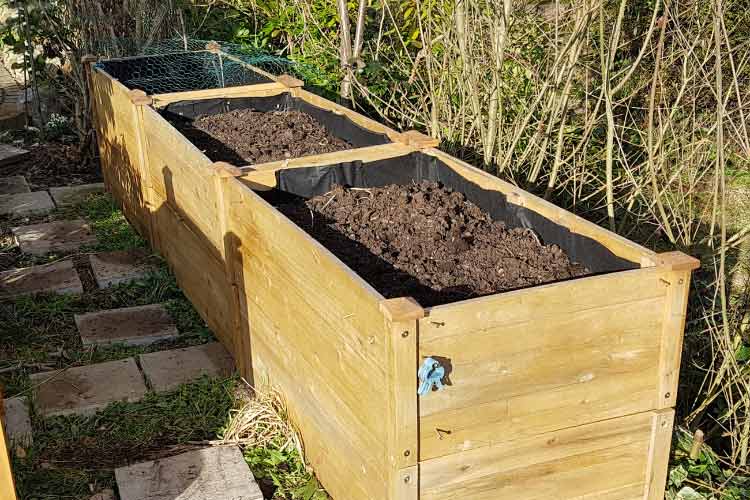
Who knew that garden beds could double as low fences? Build some rectangular boxes from pallet wood or rot resistant lumber and stack them as high as you need them to be to keep your doggos in. Fill your DIY dog fence with soil and plants to add both weight and beauty to the mix. It’s especially pretty if the raised beds are filled with tall ornamental grasses or shrubs, but even lavender can work. If you line the interior edge with some mesh, your dogs won’t be able to dig through the base, which may be their next move since they can’t get over.
5. Bamboo Fencing Panels
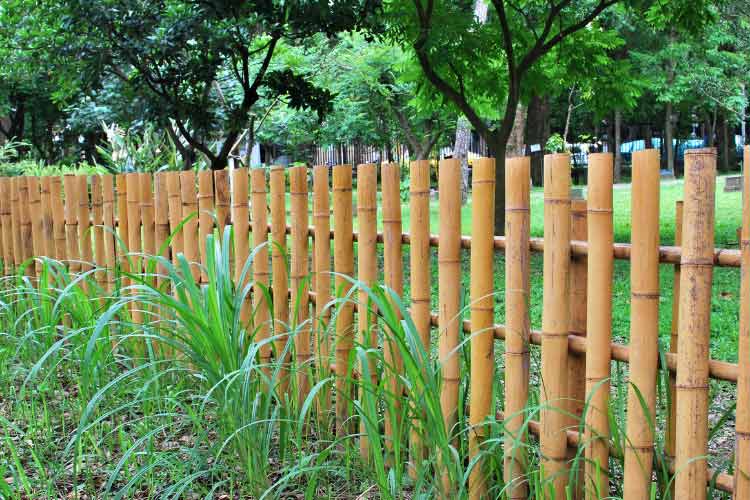
Bamboo is one of the most effective natural fencing materials out there. It comes with the added benefits of partial visibility and airflow, so your yard feels open and airy, rather than closed off and overwhelmed. Secure multiple bamboo panels to wooden posts using screws or wire ties and cap the top edge with a horizontal rail to prevent the panels from splitting. Treat the entire structure with weather sealant to reduce the rate at which the plants will fade and crack. The best way to stop diggers from getting through bamboo fencing panels is gravel edging.
6. Tension Wire And Mesh Fence
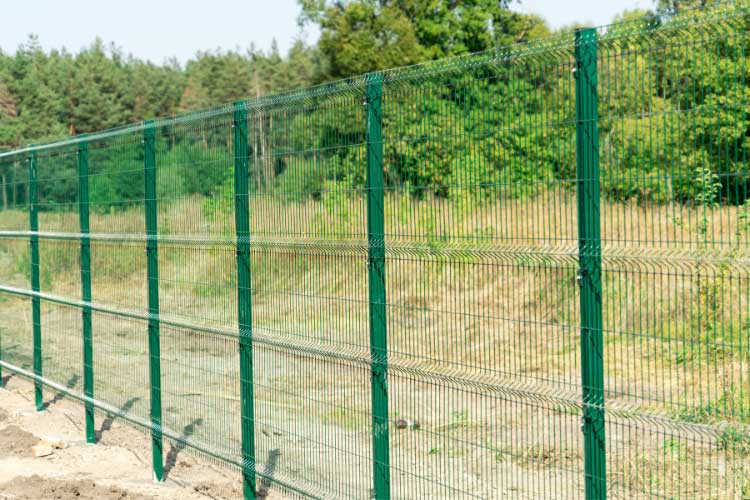
Install metal or wooden posts at close intervals and stretch good quality welded wire mesh tightly using fence pullers. Run the tension wire along the top and bottom edges, then bury the lower portion several inches underground. This is going to stop digging paws from creating a tunnel underneath. The beauty of this DIY dog fence is that it’s practically invisible from a distance, but it’s stronger than most other options. If you’re not into the industrial look, add some vinyl slats or shrubs along the perimeter to soften it.
7. Decorative Metal Panels
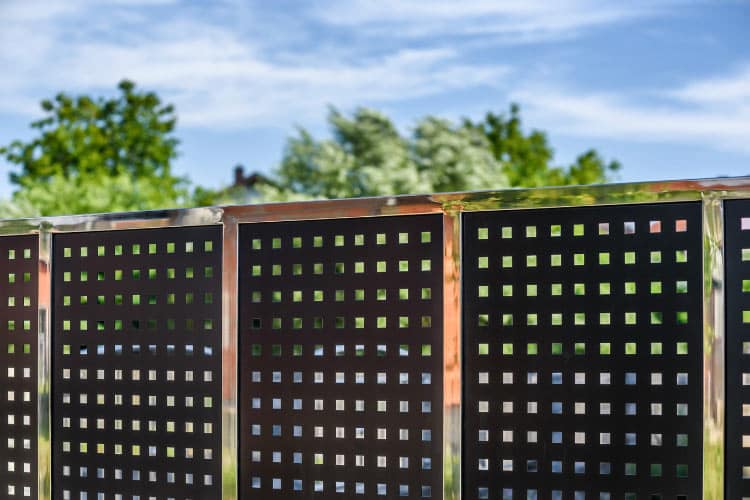
Using metal panels as a dog fence is going to require a bit more than materials and ideas. You’re going to need to get creative and use your muscles to mount laser cut steel or aluminum sheets between posts. It’s a fantastic way to blend your dog fence with your architectural rhythm, creating a practical yet aesthetically pleasing feature. Use powder coated finished to prevent rust and space them slightly above the ground for drainage. Once again, if digging is a concern you can add buried wire below the panel fence.
8. Gabion Wall Barrier
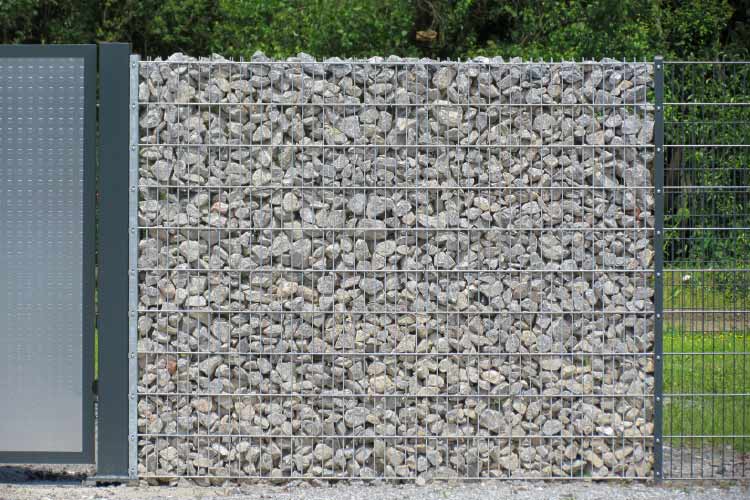
Metal baskets, some packs of river rock, gravel, or recycled concrete, and motivation. That’s what you’re going to need to create a beautiful gabion wall to keep your dogs in. These walls can be low and wide for calm dogs or tall for jumpers, but they stay good-looking. Stack the cages or baskets, fill them with the stones, and leave them as is to act as a practical decorative sculpture. You can also plant creeping ground covers nearby or line the front of the wall with ornamental grasses. Regardless of what you choose to decorate your gabion wall, they also happen to be great at resisting different weather conditions.
