
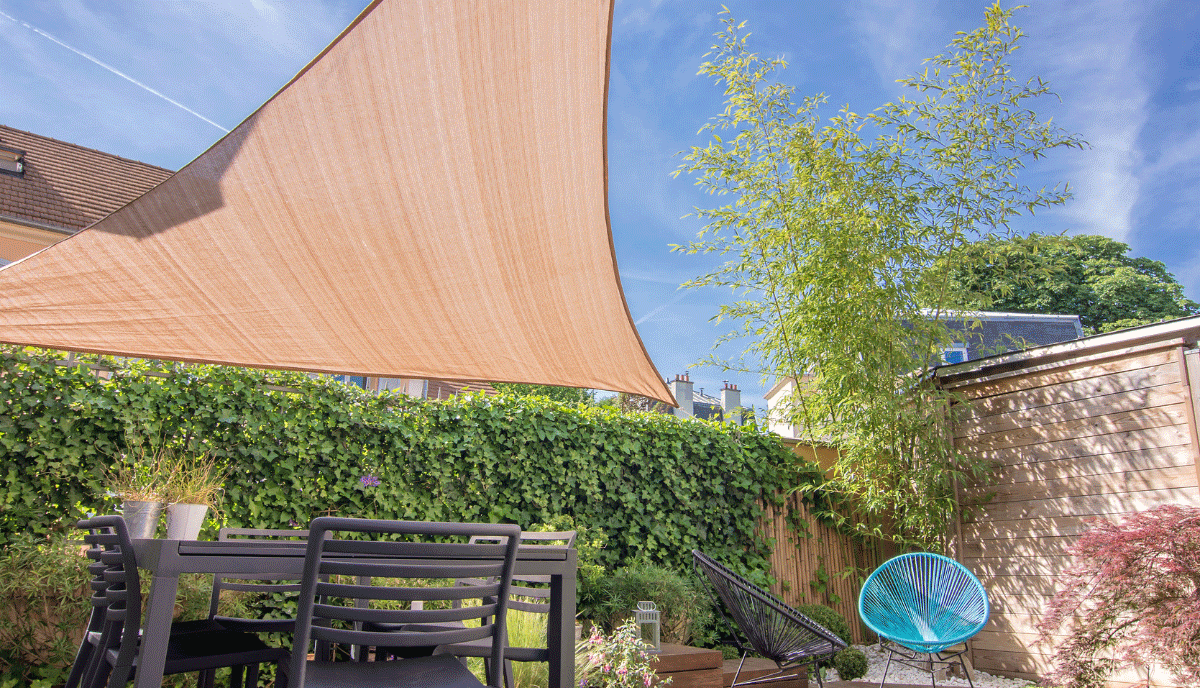
Patio shade sails do more than give you a bit of shade. They blend sun protection, style, and a touch of drama if you get creative with their layout. You can transform a simple patio into a retreat with a plain overhead feature, which is incredible. Shade sails can float above decks, wrap around seating areas, and stretch over large patios. And you can also customize them according to your style, from shape and size to color and texture. Use these shade sail ideas to cover your patio to find out how your shade sails can work for you.
1. Multi-Level Sail Setup
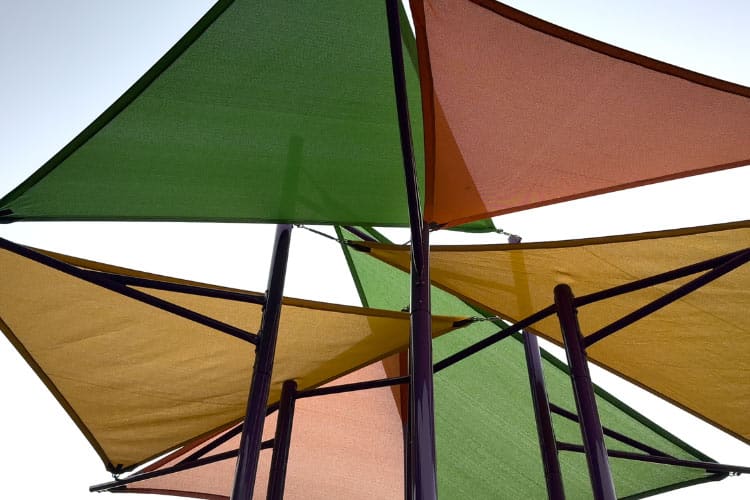
Levels. You can never go wrong with levels, especially when it comes to a shade sail setup. Multiple levels add depth and drama, regardless of how your patio looks. It also creates a floating illusion that doubles as a sculptural feature. Install different sails at different heights, but not all straight over each other. You want to create vertical and horizontal layers, covering as much direct sun as possible while allowing air to circulate freely. The lower sails should be responsible for shielding seating areas and the higher sails should provide broad coverage that prevents sun gaps throughout the day. Tensioning is important to prevent the sails from sagging and flapping in the wind, and anchoring with durable posts, walls, or trees is going to ensure stability.
2. Sail With Metal Posts
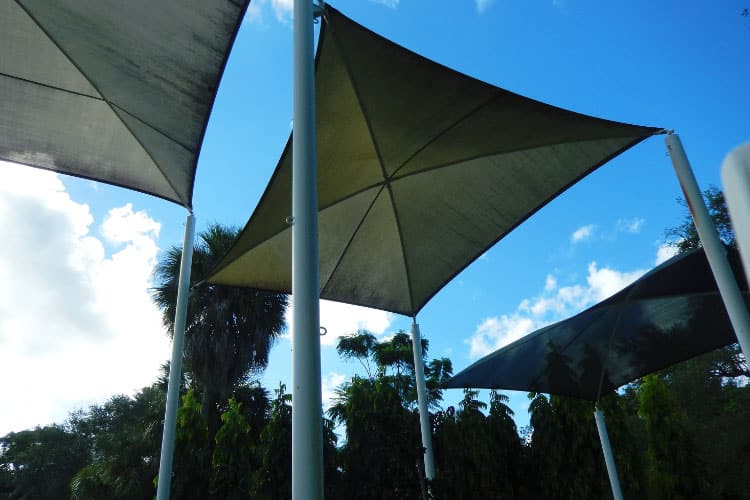
If you’re going with posts to keep your shade sail in place, you should know that they’re just as important as the fabric you choose. That counts for both structural and aesthetic purposes. Metal posts embedded in concrete footings or attached to patio decking provide strength and stability, especially if you’re going for a larger or heavy-duty setup. Steel and aluminum are both great metal choices as they resist bending, warping, and corrosion. Plus, flexibility is a major benefit because you can get creative with the height to create angled or sloped designs, and you can easily cover irregular-shaped areas.
3. Sail And Pergola Combination
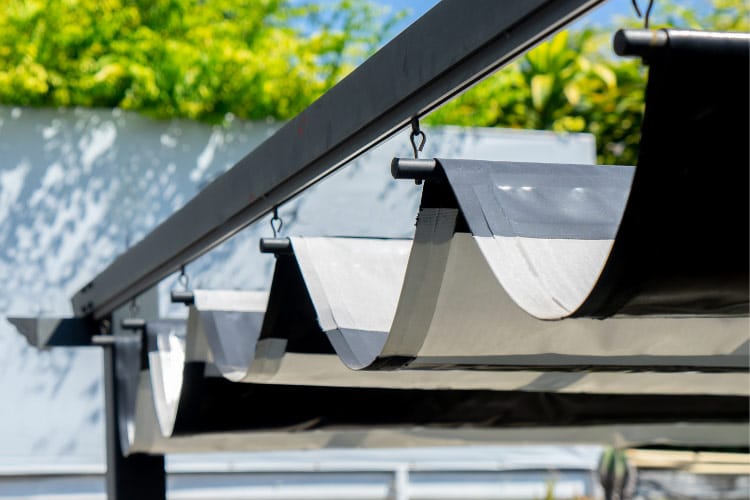
Sometimes shade sails aren’t enough to give your patio that little edge it needs. That’s when a pergola steps up to provide the structural backbone that was lacking. Layer your pergola with an extra sail to soften the rigid lines and to provide even more shade without enclosing the space, maintaining that much-needed airflow. It’s as easy as anchoring the sail to the pergola’s posts, adjacent walls, or additional posts for proper tension.Use the pergola to your advantage and hang some lighting, hanging plants, or other decorative elements from the frame.
4. Shade Sail With Lights
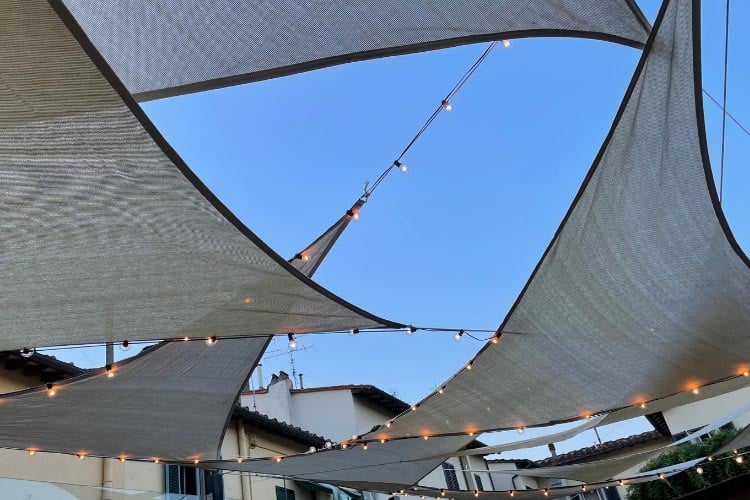
Lighting is so important in in- and outdoor design that you may have overlooked the fact that it can also be a decorative feature. Instead of relying on the sun and surrounding outdoor lighting, create your own ambiance with string lights, LED strips, or solar lanterns. Attach them along the edges of the sail or drape them underneath to create a glowing canopy that makes your shaded patio usable at night. The most crucial aspects are careful positioning to prevent shadows and waterproof fixtures to ensure safety and longevity.
5. Overlapping Geometric Sails
Visual complexity doesn’t translate to overwhelming and cluttered. When it comes to the visual complexity of overlapping geometric shade sails, it translates to contemporary, playful, and artistic. Layer triangles, rectangles, and/or polygons at different angles to form patterns that change with the sun. Thanks to the overlaps, the gaps where sunlight penetrates are reduced, creating seamless shading with good airflow. Ensure that the fabric tension is up to standard because you don’t want the intersecting points to start sagging after a while.
6. Retractable Shade Sail Awning
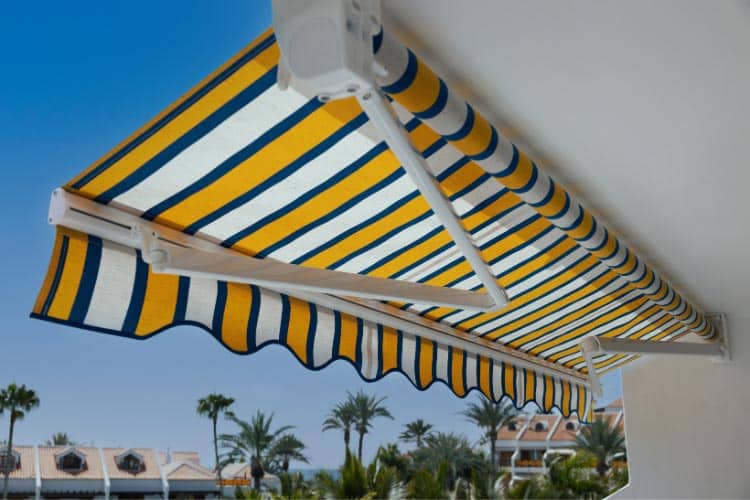
If your patio is going to need some sun every now and then, you should consider a retractable shade sail awning. This type of setup allows you to extend coverage during those hot peak sun hours and retract it again later for light sunlight, or even to watch the stars at night. Choose either manual or motorized mechanisms, with guide cables, pulleys, or tracks to control the movement of the shade sail. The retractable system not only makes your life much easier, but it prolongs the lifespan of the fabric by protecting it from wind and rain when not in use.
7. Tree-To-Tree Shade Sail Setup
Of all the shade sail ideas to cover your patio, this one may be the easiest to install, but it depends on whether you’ve got trees near your patio. Anchor the sail between two or more trees to create a natural, integrated look that eliminates the need for additional posts or walls. Trees are flexible and sturdy anchor points that maintain a sense of openness, but proper spacing and tension is still important. You also need to try to protect the trunk of the tree as much as possible, so go for wire, rope, or hardware attachments that won’t cause any harm.
8. Two-Sided Shade Sail Cabana
Where two sails meet at perpendicular angles, forming a sheltered corner that blocks sun and wind from multiple directions, good things happen. A two-sided shade sail cabana setup creates an intimate, semi-enclosed retreat on your patio that’s perfect for lounging or dining. Especially if you’re in need of privacy and protection without fully enclosing the area. Secure anchor points at freestanding posts, walls, or corners for proper tension and stability and choose the color of the fabric carefully. You want it to match with your decor, but it has to enhance the cabana-effect at the same time.
9. Curved-Edge Sail Design
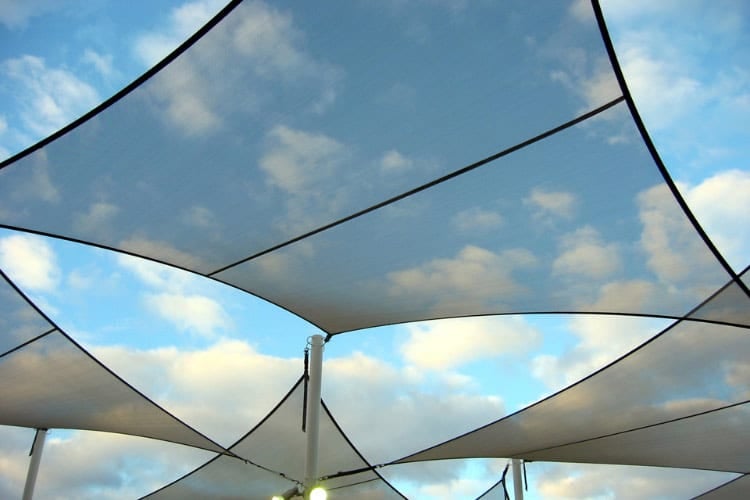
There’s a way to soften the lines of rectangular patios and straight edges. This shade sail idea to cover your patio also pairs beautifully with natural landscaping, large pools, and rounded furniture. Curved-edge sails create a light and artistic canopy with flowing, organic shapes that break the norm. It’s more of a statement than it is a practical element, but that doesn’t mean it’s purely decorative. The curved edges allow water to run off naturally while maintaining tension and shape with flexible anchors or adjustable posts.
